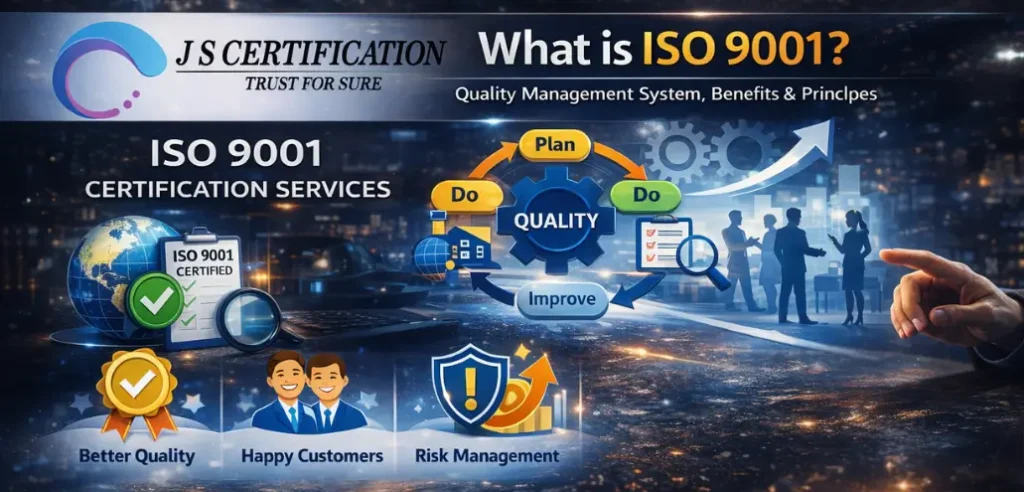
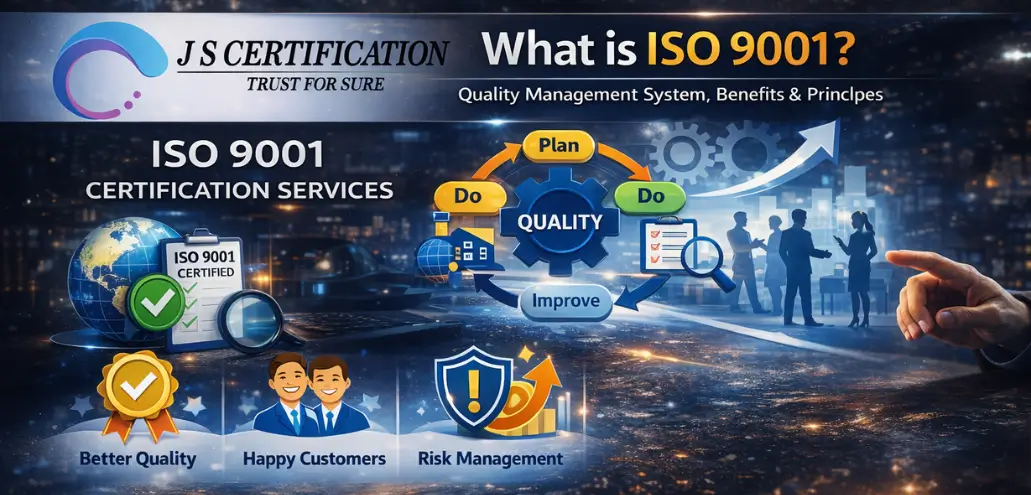
When businesses want to improve quality and build customer trust, they often ask what is ISO 9001. It is a global standard that shows how to manage work in a clear and proper way. It keeps business work organized and helps give better results every day.ISO 9001 follows simple steps for daily work. Make clear rules, follow the process, check the work, and keep improving. ISO standards are set by the International Organization for Standardization (ISO), a global body for business standards.
What is ISO 9001?
ISO 9001 definition: ISO 9001 is a global standard that helps businesses manage quality in a clear and repeatable way.
ISO 9001 meaning: it gives simple rules to plan work, do the work, check results, and improve.
What does ISO 9001 stand for: International Organization for Standardization, standard number 9001.
In simple words, ISO 9001 is about running a business with clear steps, so work is done right each time. It teaches the quality management concept, write simple processes, follow them, measure results, and fix problems. This helps teams avoid confusion and deliver steady results to customers.
What is ISO 9001:2015?
When people search for what is ISO 9001 2015, they search for that all-important phrase; they are looking for the most recent edition of this international standard. The current and most commonly used version is ISO 9001:2015 by organizations. The latest version: ISO 9001:2015 is the current version used globally.
- Why updated: It was updated to match modern business needs, risk management, digital workflows, and global supply chains.
- Global standard: Businesses in many countries follow the same structure to maintain quality consistency.
Understanding what is ISO 9001 also means understanding that the 2015 version focuses more on risk management, leadership involvement, and continuous improvement.
Why ISO 9001 is Important for Businesses?
ISO 9001 maintains a clear and systematic approach for the business. With such planned work that is followed, step by step, fewer errors can occur, and naturally, better results will be obtained. It also makes a company grow with the right systems and the right quality control.
- Better quality: Clear processes help teams do work right the first time.
- Happy customers: Customers are happy and loyal when there is good and consistent service.
- Fewer mistakes: Teams follow proper steps, so errors and rework are reduced.
- Easy management: Work becomes simple to manage, measure, and improve.
- Strong teamwork: Everyone knows their role and works toward the same goal.
- Business growth: A strong system helps the company grow with confidence.
- Global trust: Following international quality standards builds brand value.
The ISO 9001 quality management system helps businesses create a strong foundation where every process is planned, monitored, and improved regularly. It supports long-term success and stable business performance.
Who Should Implement ISO 9001?
ISO 9001 is useful for any business that wants clear work and good quality. It keeps daily work simple, organized, and easy to manage. Many types of businesses use it to keep quality strong and work smoothly.
- Small businesses: set clear steps and grow properly.
- Large companies: manage many teams under one system.
- Manufacturers: check quality at every stage of production.
- Service businesses: give the same good service each time.
- Startups: build strong systems from the first day.
- Multi-location companies: keep work and quality the same in all places.
This infographic shows which businesses can implement ISO 9001 certification.
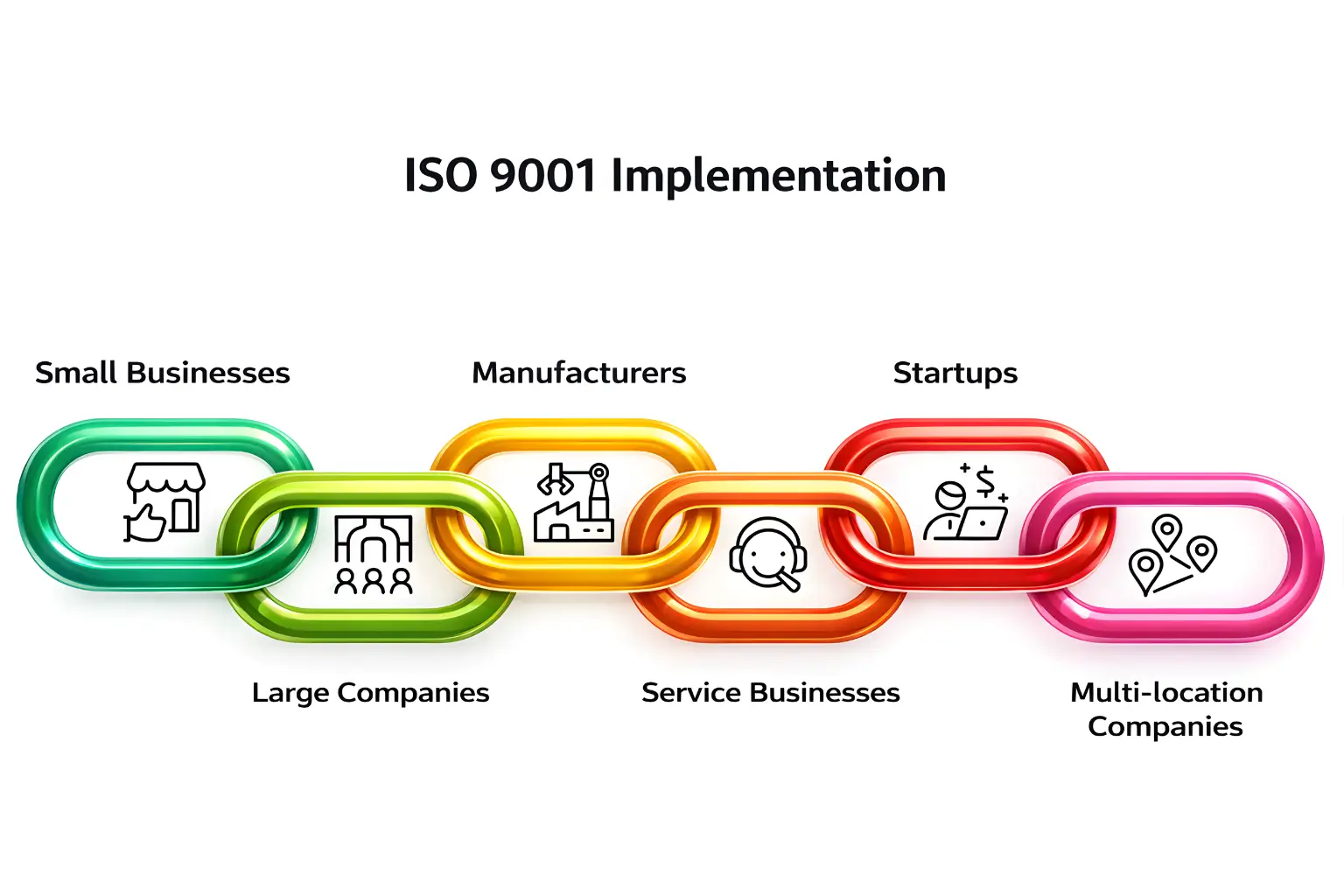
ISO 9001 is suitable for small, medium, and large businesses across all industries.
Benefits of ISO 9001 for Organizations
ISO 9001 gives clear value to any business that wants better quality and proper work control. It brings discipline in daily work and keeps processes stable as the business grows.
- Efficiency: reduces waste and extra work
- Trust: builds strong trust with customers
- Customer satisfaction: keeps service and quality steady
- Global credibility: accepted and trusted worldwide
- Better processes: make daily work clear and organized
Companies that follow ISO 9001 often see stable work, better output, and long-term customer relationships.
The 7 Quality Management Principles of ISO 9001
ISO 9001 is built on seven basic quality principles. These principles show how a company should run its work, manage quality, and keep improving day by day.
- Customer focus: know what customers need and give good service.
- Leadership: leaders guide the team and set clear direction.
- People involvement: everyone works together to keep quality strong.
- Process approach: work is done step by step in a proper way.
- Improvement: keep making work better all the time.
- Fact-based decisions: use real data and records to decide.
- Relationship management: keep good relations with clients and suppliers.
These principles keep work simple and clear and support strong daily business operations.
7 Quality Management Principles of ISO 9001 explained.
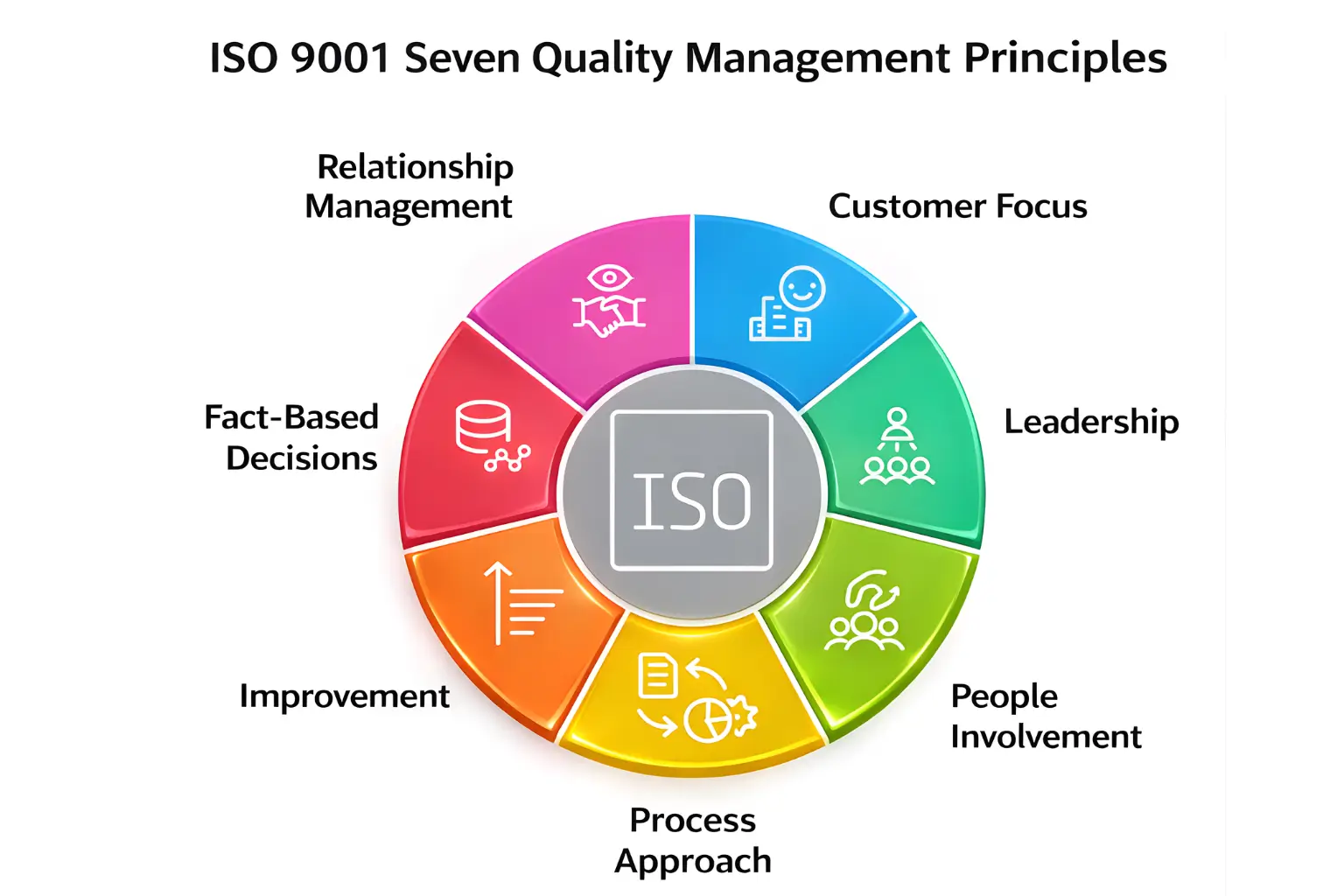
7 Quality Management Principles of ISO 9001 help improve quality and business performance.
ISO 9001 Quality Management System Explained
An ISO 9001 quality management system is a clear way to run business work in a proper manner. It sets simple rules so every task is done in the same way each time. When work steps are written and followed, teams stay organized, and quality stays stable.
- Makes daily work clear and easy to follow.
- Keeps all processes clean and in order.
- Defines roles and responsibilities for each team member.
- Checks work to find and correct errors.
- Improves work step by step over time.
- Maintains good and steady customer service.
This system keeps work in control, reduces mistakes, and maintains smooth and consistent business operations.
ISO 9001:2015 Clauses Overview
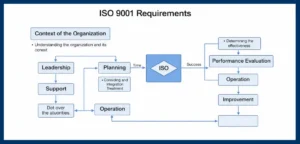
ISO 9001:2015 has ten main clauses. These clauses guide how a business should manage work and keep quality strong in daily operations.
Clause 1–3: basic scope, terms, and use of the standard.
Clause 4: understand business work and customer needs.
Clause 5: leadership role and quality focus.
Clause 6: planning, risks, and quality goals.
Clause 7: people, tools, and support for work.
Clause 8: control of daily operations.
Clause 9: checking work and internal audit.
Clause 10: fixing problems and improving work.
These clauses keep the ISO 9001 qms clear and well managed. For full details of each clause, read our ISO 9001 requirements guide, where all points are explained step by step.
ISO 9000 vs ISO 9001 (Key Differences)
| Point | ISO 9000 | ISO 9001 |
| Purpose | shows basic quality ideas and terms | gives clear quality rules for work |
| Type | guide for learning quality | standard with real requirements |
| Certification | no certification | Certification can be done |
| Focus | quality ideas and principles | work process and quality control |
| Use in business | to understand the quality system | to run and improve daily work |
ISO 9000 gives basic knowledge about quality and its terms. ISO 9001 gives clear rules that businesses follow to keep work proper, controlled, and better over time.
Common Myths About ISO 9001
Many people have wrong ideas about ISO 9001. In real use, this standard is simple and useful for many types of businesses.
Only for big companies: small businesses can also use it for better work control.
Too costly: clear processes reduce waste and save money.
Only for factories: service companies also use it daily.
Too much paperwork: only the simple and needed documents are required.
ISO 9001 keeps work clear and organized and supports steady improvement in daily business. JS Certification guides companies to get ISO 9001 certification in an easy and smooth way. If you want to know more about ISO 9001 certification consultancy services, you can visit our service page for complete details.
Conclusion:
Now you clearly understand what ISO 9001 is and why it is important for modern businesses. It gives a clear way to manage work and maintain strong quality in daily operations. With proper systems and clear processes, businesses can improve their work, control mistakes, and build customer trust. When work is planned and checked regularly, results remain stable and reliable.
Companies that want better quality control, strong performance, and global credibility should follow ISO 9001 in their daily operations. It keeps work organized, improves consistency, and supports long-term business growth.