ISO certification in Saudi Arabia is important for all businesses. As the country grows under Vision 2030, companies need to follow quality and safety rules to work legally. ISO certification helps improve daily work, reduce mistakes, and win more government and private projects. It is often required for government tenders, mega projects like NEOM, and working with major companies such as Saudi Aramco. JS Certification is counted among the best ISO consultancies supporting Saudi businesses with online consulting, documentation, system implementation, and coordination of required site visits and certification audits across Saudi Arabia.
What Is ISO Certification?
ISO certification means a business follows simple rules for quality and safety. These rules help companies work better and stay organized. ISO covers areas like quality, safety, food, environment, and IT. In Saudi Arabia, ISO certification shows that a business follows global standards and local rules.
Overview of the Saudi Market: Major Industries and Key Regions
Saudi Arabia has many different business sectors, each with its own rules. Different industries are concentrated in specific cities, and each sector follows its own compliance expectations. Choosing the right ISO certification in Saudi Arabia depends on both the industry type and operating location.
Industry-wise ISO Certification Requirements in Saudi Arabia
Different industries in Saudi Arabia need different ISO certifications. The table below shows the most common requirements by sector and city.
| Industry / Business Sector | Key Cities & Industrial Hubs | Required ISO / Certifications |
| IT, Cybersecurity & FinTech | Riyadh, NEOM | ISO 27001:2022 (Information Security), ISO/IEC 42001:2023 (AI Management Systems), CMMI Certification, SOC 2 Certification |
| Oil, Gas & Energy | Jubail, Yanbu, Dammam | ISO 9001:2015 (Quality Management), ISO 14001:2015 (Environmental Management), ISO 45001:2018 (Occupational Health & Safety), ISO 50001:2018 (Energy Management) |
| Construction & Infrastructure | Riyadh, Jeddah, NEOM | ISO 9001:2015, ISO 14001:2015, ISO 45001:2018 |
| Food Processing & Catering | Riyadh, Jeddah, Makkah | ISO 22000:2018 (Food Safety Management), HACCP Certification, GMP Certification |
| Healthcare & Medical Devices | Riyadh, Jeddah, Makkah | ISO 13485:2016 (Medical Devices Quality Management), ISO 9001:2015, GMP Certification |
| Manufacturing & Industrial Units | Riyadh, Jubail, Yanbu | ISO 9001:2015, ISO 14001:2015, ISO 45001:2018, ISO 50001:2018 |
| AI, Software & Emerging Technologies | Riyadh, NEOM | ISO/IEC 42001:2023, ISO 27001:2022, CMMI Certification, SOC 2 Certification |
Why Businesses Need ISO Certification in Saudi Arabia?
In Saudi Arabia, businesses must follow clear quality and safety rules to operate legally. Many government projects and large companies require ISO certification before awarding contracts. ISO certification helps businesses meet Saudi laws, follow international standards, and work in a more organized way. It also builds trust with clients and supports steady growth in the Saudi market.
Key Reasons for ISO Certification in Saudi Arabia
- Win more projects: Clients often prefer ISO-certified companies, which improves the chances of getting shortlisted.
- Easy audits and inspections: Clear records and systems make audits simple and less stressful.
- Professional business image: ISO certification shows that your company is reliable and well-managed.
- Consistent quality of work: Standard processes help deliver the same quality on every project.
- Clear roles for employees: Employees understand their responsibilities, improving teamwork and efficiency.
- Smooth legal compliance: ISO systems help businesses meet Saudi laws and industry requirements.
- Stable long-term growth: ISO-certified companies manage growth better with fewer risks.
Top ISO Certifications Consultancy Services We Provide in Saudi Arabia
JS Certification provides professional ISO Consultancy services in Saudi Arabia, supporting organizations from gap analysis and documentation to audit preparation and coordination with accredited certification bodies. Below is the full list of certifications we offer:
ISO 9001 Certification in Saudi Arabia
ISO 9001 certification in Saudi Arabia is required by construction, manufacturing, trading, and service companies across Riyadh, Jeddah, Dammam, Jubail, and NEOM, and JS Certification provides end-to-end ISO 9001 consultancy for tender and quality compliance.
ISO 14001 Certification in Saudi Arabia
ISO 14001 certification in Saudi Arabia is essential for oil & gas, construction, manufacturing, and logistics sectors in Jubail, Yanbu, Riyadh, and industrial areas, supported by JS Certification’s ISO 14001 consultancy aligned with Vision 2030 sustainability goals.
ISO 45001 Certification in Saudi Arabia
ISO 45001 certification in Saudi Arabia is required for construction, oil & gas, manufacturing, and warehousing companies to meet occupational health and safety regulations in key Saudi regions, with JS Certification offering end-to-end consultancy.
ISO 22000 Certification in Saudi Arabia
ISO 22000 certification in Saudi Arabia is required for food manufacturers, restaurants, hotels, catering services, and food exporters in Riyadh, Jeddah, Makkah, and Madinah, and JS Certification provides ISO 22000 food safety consultancy and audit support.
ISO 27001 Certification in Saudi Arabia
ISO 27001 certification in Saudi Arabia is critical for IT companies, fintech firms, cloud service providers, and data-driven businesses in Riyadh, NEOM, and Jeddah, with JS Certification offering information security consultancy for IT and government tenders.
ISO 50001 Certification in Saudi Arabia
ISO 50001 certification in Saudi Arabia is suitable for manufacturing plants, energy-intensive industries, and large facilities in Jubail, Yanbu, Riyadh, and industrial cities, and JS Certification provides energy management consultancy for efficiency and sustainability.
ISO 13485 Certification in Saudi Arabia
ISO 13485 certification in Saudi Arabia is required for medical device manufacturers, suppliers, and healthcare companies in Riyadh, Jeddah, and Dammam, and JS Certification provides ISO 13485 consultancy for regulatory and healthcare compliance.
ISO/IEC 42001 Certification in Saudi Arabia
ISO/IEC 42001 certification in Saudi Arabia is designed for AI-based companies, fintech firms, and digital solution providers in Riyadh, NEOM, and smart city projects, with JS Certification supporting ethical and secure AI management consultancy.
GMP Certification in Saudi Arabia
GMP certification in Saudi Arabia is required for pharmaceutical, cosmetic, and healthcare product manufacturers in Riyadh, Jeddah, and Dammam, and JS Certification provides GMP consultancy to meet SFDA and regulated manufacturing requirements.
HACCP Certification in Saudi Arabia
HACCP certification in Saudi Arabia is essential for food processing units, restaurants, hotels, and catering companies in Jeddah, Riyadh, Makkah, and Madinah, with JS Certification offering HACCP food safety consultancy.
CMMI Certification in Saudi Arabia
CMMI certification in Saudi Arabia is suitable for software development and IT service companies in Riyadh and technology hubs, and JS Certification provides CMMI consultancy to improve process maturity and contract eligibility.
SOC 2 Certification in Saudi Arabia
SOC 2 certification in Saudi Arabia is required for cloud service providers, SaaS companies, and IT outsourcing firms handling customer data, with JS Certification providing SOC 2 consultancy for security and trust compliance.
SOC 1 Certification in Saudi Arabia
SOC 1 certification in Saudi Arabia is required for service organizations managing financial reporting or payroll systems, and JS Certification provides SOC 1 consultancy to support financial control and audit readiness.
Benefits of ISO Certification in Saudi Arabia
The infographic below highlights the key benefits of ISO certification in Saudi Arabia.
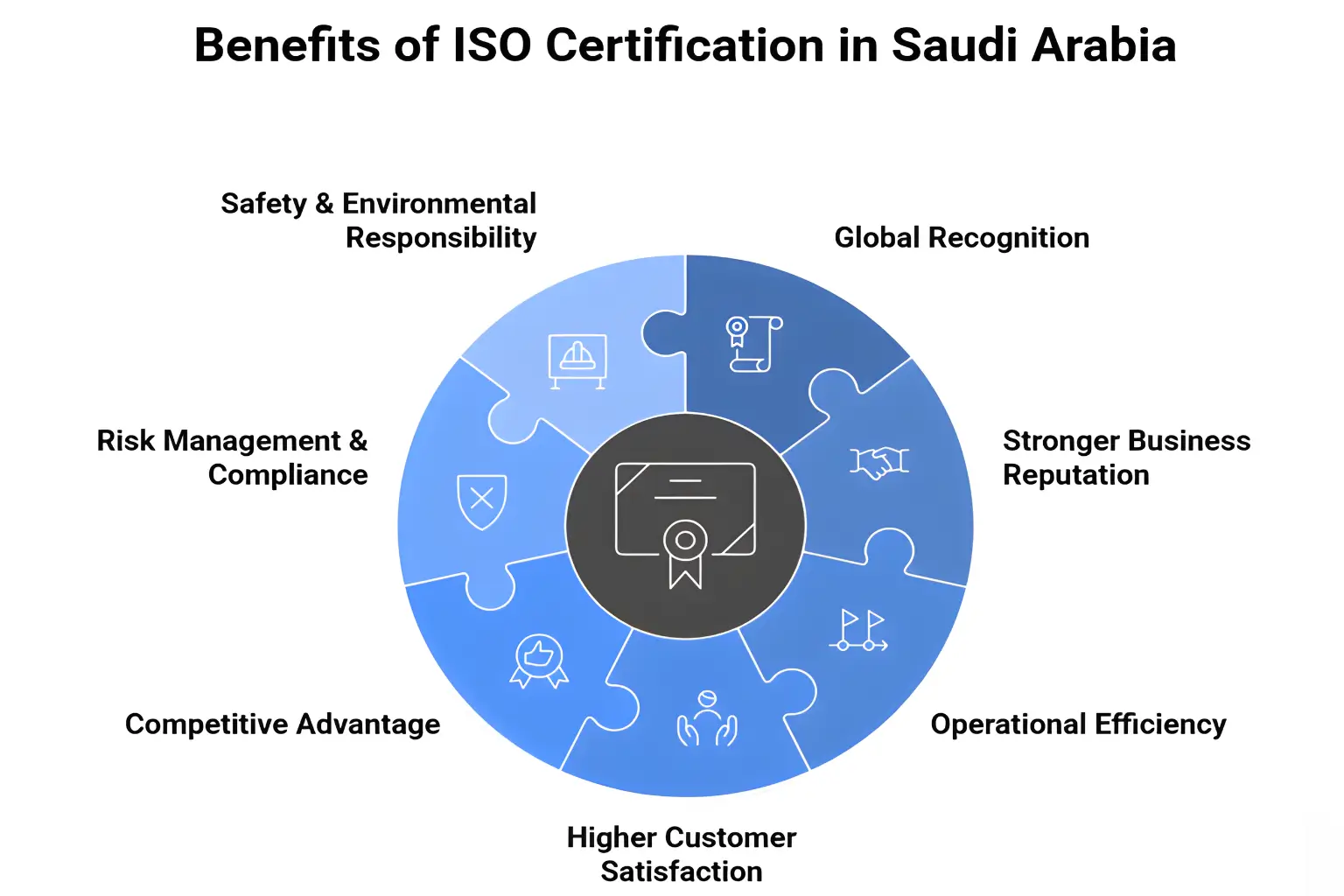 Key benefits of ISO certification for businesses in Saudi Arabia.
ISO Certification in Saudi Arabia gives real business strength to companies. It is not just a certificate; it helps businesses grow, win contracts, and build long-term trust in the Saudi market.
Key Benefits of ISO Certification in Saudi Arabia
Helps businesses do daily work in a better and clearer way.
Makes clients and government offices trust the company more.
Helps follow Saudi laws and apply for tenders easily.
Supports Vision 2030 and big projects like NEOM.
Makes it easier to work with large companies like Saudi Aramco.
Reduces mistakes, problems, and extra work.
Keeps employees safe and aware at the workplace.
Makes the business look professional and reliable.
Step-by-Step Process of ISO Certification in Saudi Arabia
This process is followed by JS Certification for clients across Riyadh, Jeddah, Dammam, and industrial zones.
The infographic below shows the complete ISO certification process followed in Saudi Arabia
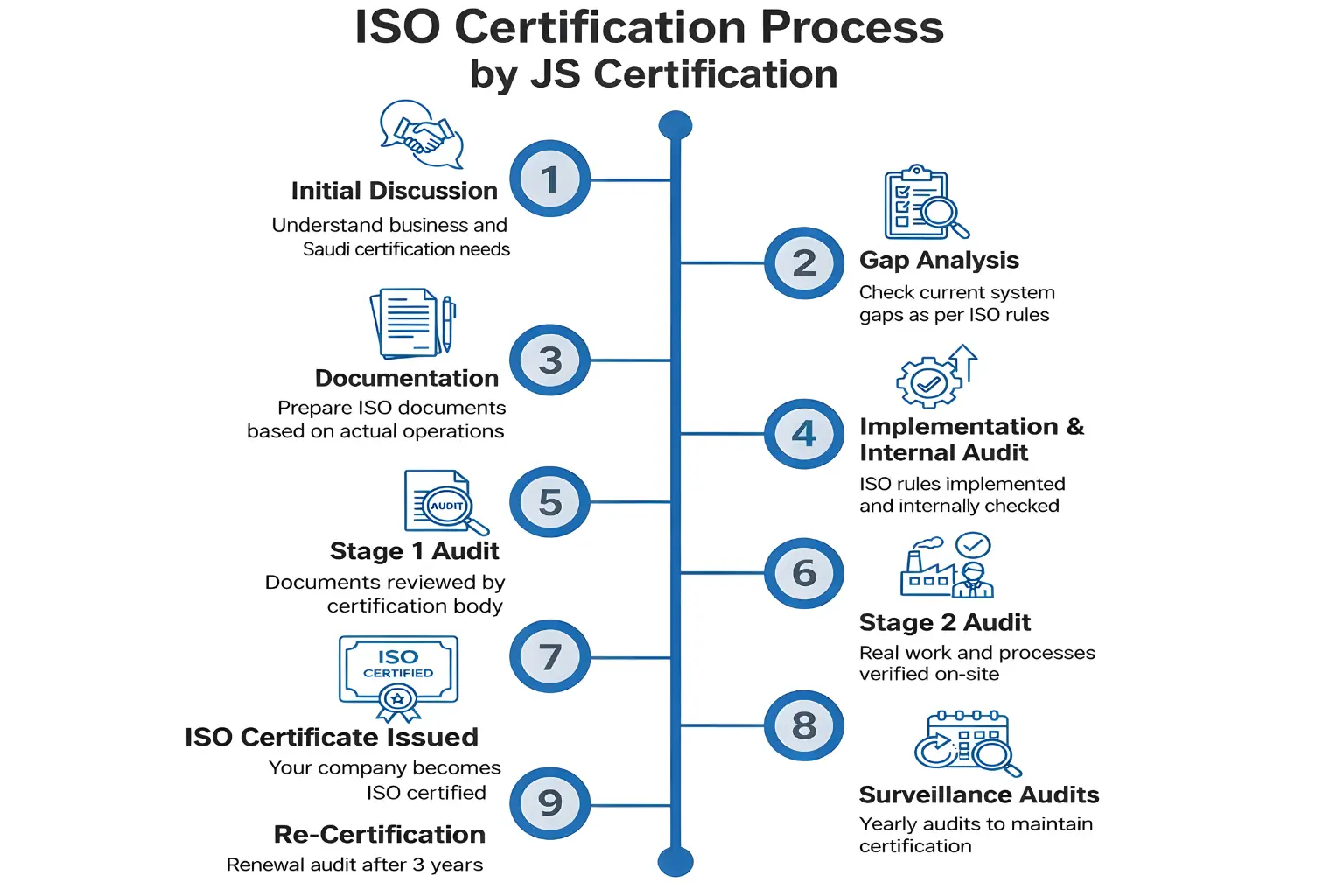
At JS Certification, we use a simple and trusted ISO certification process made especially for businesses in Saudi Arabia. The steps follow global ISO rules, but the implementation is matched with Saudi regulations, local market needs, and Saudi Vision 2030 goals.
Step 1 – Initial Discussion: At JS Certification, we first understand your business activities, industry sector, and certification objectives. Based on the Saudi client, tender, or government requirements, we recommend the most suitable ISO standard.
Step 2 – Gap Analysis: Our experts review your existing processes against ISO standards and Saudi compliance expectations. This helps identify gaps that need correction before certification.
Step 3 – Documentation Preparation: JS Certification prepares all required ISO documents, policies, and procedures. Documentation is aligned with your actual operations and Saudi business regulations
Step 4 – Implementation & Internal Audit: We guide you through step-by-step implementation across offices, sites, and projects. An internal audit is conducted to ensure full readiness for the certification audit.
Step 5 – Stage 1 Audit (Document Check): The certification body reviews your ISO documents. If small changes are needed, we help you fix them quickly.
Step 6 – Stage 2 Audit (Final Audit): Auditors verify real implementation at your workplace or project locations. Processes, records, and employee awareness are thoroughly checked.
Step 7 – ISO Certificate Issuance: After successful audit completion, the ISO certificate is issued.
Your organization becomes officially ISO certified in Saudi Arabia.
Step 8 – Surveillance Audits: JS Certification provides support during annual surveillance audits.
This ensures continued compliance and system improvement.
Step 9 – Re-Certification: After three years, we assist with the re-certification audit.
This helps you continue ISO certification without interruption.
Cost of ISO Certification in Saudi Arabia
ISO Certification costs in Saudi Arabia vary mainly by company size, industry risk, and certification scope. While large organizations require higher investment, ISO certification is widely viewed as a value-driven decision that improves compliance, tender eligibility, and long-term business performance.
ISO Certification Cost by Business Size
| Business Size | Level of Investment | Suitable For |
| Small Businesses | Basic to moderate investment | Start-ups, small offices, micro-enterprises |
| Medium Businesses | Moderate investment | SMEs, factories, regional companies |
| Large Organizations | Higher investment | Corporations, multi-location companies, and enterprises with complex operations |
Why Choose JS Certification as Your ISO Consultant
Choosing the right consultant is essential for successful ISO Certification in Saudi Arabia. At JS Certification, we focus on making the certification process simple, practical, and business-oriented.
Why JS Certification?
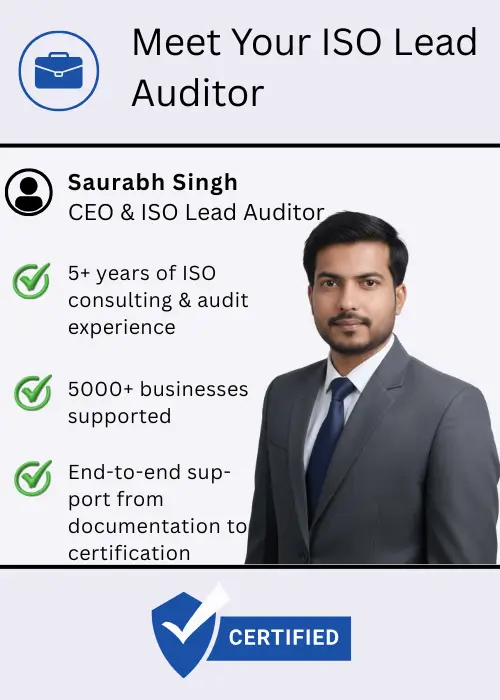
- 5+ Years of ISO Consulting Experience across multiple industries
- Customized documentation tailored to your business (no generic templates)
- Fast certification timelines ranging from 7 to 30 days
- Transparent and affordable pricing with no hidden costs
- Multi-standard support, including ISO, GMP, HACCP, CMMI, and SOC
- Strong understanding of Saudi regulations, including Aramco and government tender requirements
- End-to-end guidance from gap analysis to final certification
We don’t just help you get certified. We build management systems that pass audits and support long-term business growth.
Start Your ISO Journey in Saudi Arabia
ISO Certification in Saudi Arabia has become a strategic requirement under Vision 2030. Organizations that move early strengthen compliance, meet tender expectations, and gain a clear competitive edge in the market.
JS Certification works with leadership teams to deliver a structured, efficient, and value-driven ISO certification process- focused on real system improvement, audit readiness, and long-term business performance.